⚠️ Incident Debrief #003
SS El Faro — How a List Silenced a 30,000-Horsepower Engine and Sank a Ship
Vessel
SS El Faro (Ro-Ro / container cargo ship)
Location
~40nm NE of Crooked Island, Bahamas
Deaths
33 — entire crew, no survivors
Incident Type
Loss of Propulsion · Foundering
Root Cause
List-induced lube oil starvation
Investigation
NTSB · USCG Marine Board
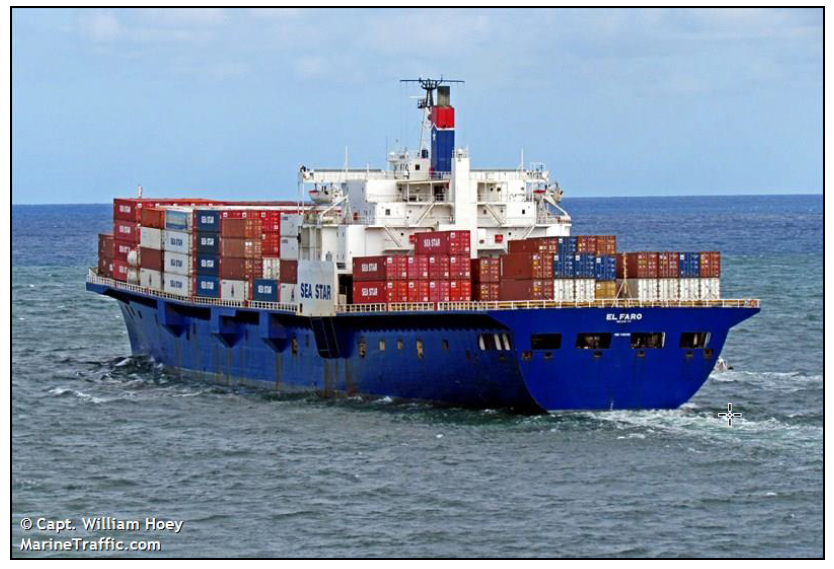
SS El Faro, a 40-year-old steam-turbine cargo ship, on a route she had sailed for years between Jacksonville and San Juan. Source: NTSB Marine Accident Report MAR-17/01.
33
Crew lost — the entire complement, no survivors
40
Years old — built 1975, twin steam turbines
30,000
Shaft horsepower — lost to a single loose margin
15,250ft
Depth the VDR was recovered from, 10 months later
$36M
Estimated damages from the sinking
What Happened
A Straight-Line Course Into a Strengthening Hurricane
On 29 September 2015, the 790-foot SS El Faro departed Jacksonville, Florida, bound for San Juan, Puerto Rico — a route she had run for years. Tropical Storm Joaquin was already tracking through the Bahamas. The captain held the vessel's normal course rather than diverting early, and through the night, Joaquin strengthened into a hurricane faster than most forecasts anticipated.
By the early hours of 1 October, El Faro was taking a persistent list to port as wind and sea state built on her beam. At 0556, the captain acknowledged over the VDR that the ship was "listing over to port." Within the hour, that list would prove fatal — not just to the vessel's stability, but to her main engine's ability to run at all.
At 0613, the captain reported the plant was lost. El Faro's twin steam turbines — 30,000 horsepower between them — stopped, and never restarted. Dead in the water in a hurricane, with flooding already underway in her cargo holds, the vessel had no way left to fight for her position. She sank at approximately 0740. All 33 people on board — including 5 Polish repair contractors — were lost.
The engineering question that matters: How does a 30,000-horsepower steam propulsion plant lose lubricating oil pressure and shut itself down in open water — and why did nobody aboard know that a list of that severity would take the main engine down with it?
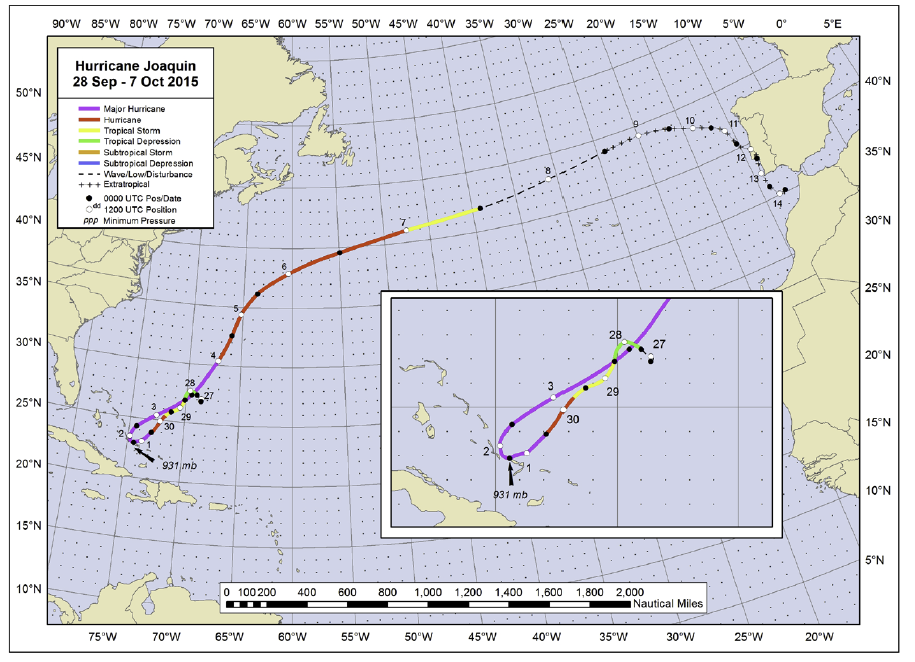
Hurricane Joaquin's track plotted against El Faro's planned route from Jacksonville to San Juan. A delayed weather file — twelve hours old by the time it reached the bridge — left the crew working from outdated storm positioning. Source: NTSB Investigation MAR-17/01.
Background
The Ship, the Storm, and a Company That Wasn't Watching
El Faro was built in 1975 as the SS Puerto Rico and later converted to carry roll-on/roll-off cargo and containers, ultimately displacing 34,677 long tons at full load. She was operated by TOTE Services, Inc. under TOTE Maritime Puerto Rico, running a fixed weekly rotation between Jacksonville and San Juan — a schedule the investigation found created inherent pressure to keep sailing, even without direct evidence that TOTE pushed the captain to hold his course.
A malfunction in the ship's weather software, the Bon Voyage System, meant a critical forecast file transmitted at 2304 the night before wasn't actually downloaded to the bridge until 0445 the next morning — already 12 hours stale by the time anyone saw it. The captain did not use the most current weather information available to him for his decision-making, and investigators found he did not adequately weigh his junior officers' concerns about the storm's track raised overnight.
None of that alone sank the ship. What sank El Faro was what happened in the engine room once the list took hold — and what happened after that, once the main engine stopped and the flooding that followed had nothing standing in its way.
NTSB-Identified Systemic Failures
Inadequate company oversight — TOTE did not monitor El Faro's position relative to Hurricane Joaquin during the voyage and provided no storm-avoidance support to the captain, despite subscribing to a damage-assessment service the crew was never trained to use.
Ineffective bridge resource management — the concepts of BRM were not implemented aboard El Faro. Junior officers raised concerns about the storm's track; investigators found the captain failed to adequately consider their input.
No damage control plan — El Faro was not required to carry one. The NTSB concluded that a damage control plan, combined with crew training in its use, would likely have improved the crew's ability to assess and respond to the flooding they faced.
Inadequate survival craft — El Faro carried open lifeboats, a design the investigation found would not have provided adequate protection even if launch had been possible in the conditions the crew faced at 0729.
The Final Transmissions
What the Voyage Data Recorder Captured
El Faro's VDR was recovered from 15,250 feet of water in August 2016 — nearly a year after the sinking — by a joint NTSB, US Navy, and Woods Hole Oceanographic Institution mission. It yielded more than 26 hours of parametric data and audio. The final 45 minutes recorded aboard the bridge tell the story of a ship that lost her engine and never got it back.
0556WARNINGCaptain acknowledges vessel "listing over to port now" — port list developing under wind and sea on the beamBridge
0600WARNINGCrew reports water in cargo hold 3 — bilge pumps engaged, unaware flooding already exceeds pump capacityCargo hold 3
0613PROPULSION LOSTCaptain: "I think we just lost the plant." Main engine trips on low lube oil pressure. Propulsion never restored for remainder of casualtyEngine room ❌
0700WARNINGCaptain informs designated person ashore: vessel listing, crew "taking every measure to get the list off"Shore contact
0727CRITICALGeneral alarm sounds for 12 seconds — crew ordered to muster on starboard sideAll hands
0729ABANDON SHIPCaptain orders abandon ship. Vessel already listing severely — approximately 10 minutes before sinkingFATAL ❌
0739:42RECORDING ENDSLow-frequency rumble begins at 0739:32 and continues until the audio recording terminates. No further communications receivedTotal loss ❌
Timeline
From Departure to Foundering — and the Investigation That Followed
29 Sep 20:10
El Faro departs Jacksonville for San Juan
Vessel departs on her standard route with Tropical Storm Joaquin already tracking through the Bahamas. Captain elects to hold the normal course rather than divert early.
Departure30 Sep, overnight
Weather file delayed — 12 hours stale on arrival
Joaquin strengthens into a hurricane faster than forecast. A Bon Voyage System glitch delays a critical weather file reaching the bridge until 0445 — by then significantly out of date.
Hidden Problem1 Oct 04:30–05:56
Sustained port list develops
Wind and sea state build on the vessel's beam. The list does not correct itself — and is now exposing the main engine's lube oil suction pipe to air with every roll.
List Develops1 Oct 06:00
Flooding reported in cargo hold 3
Water enters through an open watertight scuttle and damaged seawater piping. Crew begins pumping — but the rate of ingress already exceeds the bilge pumps' design capacity.
Flooding Begins1 Oct 06:13
Total loss of propulsion
The main engine trips on low lube oil pressure and cannot be restarted. El Faro is now dead in the water in a hurricane, with no way to maneuver away from the worsening weather or reduce her list.
Engine Lost1 Oct 07:00–07:24
Flooding accelerates through ventilation closures
Seawater enters ventilation ducting to additional cargo holds. Captain reports the situation to shore management but has not yet ordered abandon ship.
Downflooding1 Oct 07:29
Abandon ship ordered
The order comes roughly 10 minutes before the vessel sinks — leaving little time to launch survival craft in hurricane-force conditions and a severe list.
Abandon Ship1 Oct ~07:40
El Faro sinks — all 33 aboard lost
The vessel founders approximately 40 nautical miles northeast of Crooked Island, Bahamas, in about 15,000 feet of water. No survivors are found.
Total LossAug 2016
Voyage data recorder recovered
A joint NTSB, US Navy, and Woods Hole Oceanographic Institution mission recovers the VDR from 15,250 feet — nearly a year after the sinking, on the third undersea recovery mission.
VDR Recovered12 Dec 2017
NTSB adopts final investigation report
NTSB publishes MAR-17/01, identifying list-induced lube oil starvation as the mechanism of propulsion loss, and citing the captain's storm-avoidance decisions as probable cause. 70 safety recommendations issued.
NTSB Report
Technical Analysis
The Engineering Failure — How a List Stopped the Main Engine
El Faro's twin steam turbines drove a single reduction gear, which depended on a continuous supply of lubricating oil drawn from a sump beneath the gear casing. Two service pumps pulled oil from that sump through a suction pipe positioned to work at normal, near-upright operating angles.
The list uncovered the suction pipe: as the vessel's port list increased, the oil in the sump shifted with it. Investigators concluded the list, combined with the ship's motion, most likely allowed air to enter the bellmouth of the suction pipe. Once air entered the line, the pumps lost their prime and oil pressure to the main engine bearings collapsed — and the engine's protective system shut it down before the bearings could run dry and fail catastrophically.
The margin was already thin: the vessel's operations manual called for a minimum sump oil level that, investigators found, had not been consistently maintained in the months before the accident. The reduced margin meant the suction pipe uncovered at a smaller angle of list than it would have with a properly maintained sump — and there was no guidance available to the crew describing at what angle the lube oil supply would become unreliable in the first place.
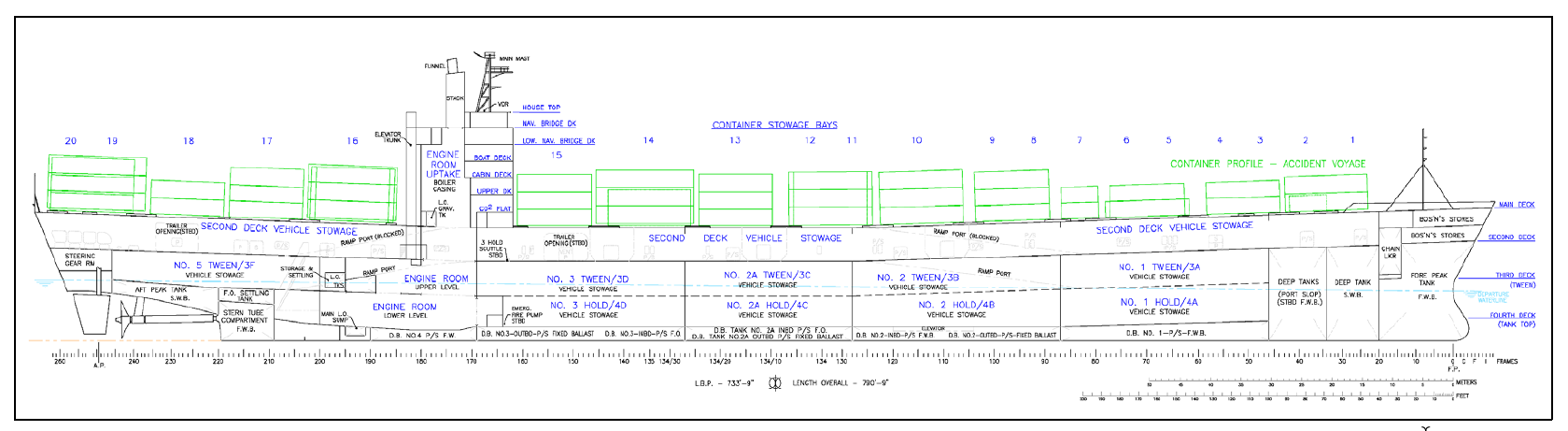
Profile arrangement of El Faro, showing the engine room's position relative to the hull and cargo holds. The main engine's lube oil sump sat beneath the reduction gear, low in the hull — exactly where a sustained list would have its greatest effect. Source: NTSB Investigation Report MAR-17/01.
Upright Operation vs Sustained List — Why the Engine Stopped
✅ Normal Operating Angle
Suction pipe fully submerged in the lube oil sump
Service pumps maintain full prime and pressure
Sump level maintained per operations manual
Adequate margin against momentary list or roll
Bearings receive continuous oil supply
❌ Sustained Port List (what El Faro experienced)
Oil shifts with the list, exposing the suction bellmouth
Air enters the line — pumps lose prime
Sump level below manual-specified minimum
No margin left once the list became sustained, not momentary
Oil pressure collapses — engine protection trips the plant
The Complete Failure Chain
Wind on beam
list develops
→
Sump oil
shifts with list
→
Air enters
suction bellmouth
→
Lube oil
pressure collapses
→
Main engine
trips, won't restart
→
Foundering
33 dead
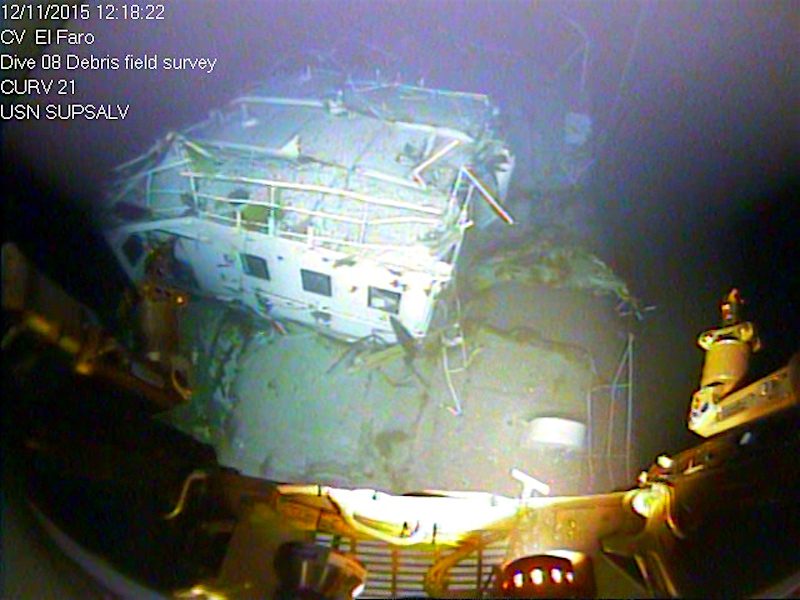
Recovery of El Faro's voyage data recorder from 15,250 feet, August 2016 — the third undersea mission and the source of the 26 hours of data and audio that let investigators reconstruct the ship's final 45 minutes. Source: NTSB.
Root Cause Analysis
Five Failures That Turned a Storm Encounter Into a Total Loss
El Faro was not lost to any single failure. The NTSB's probable cause centers on the captain's decision-making — but the engine room failure that left the ship helpless, and the flooding that followed unchecked, were what turned a dangerous storm encounter into the loss of everyone aboard.
01
Insufficient action to avoid the hurricane
The NTSB's probable cause: the captain's insufficient action to avoid Hurricane Joaquin, his failure to use the most current weather information, and his late decision to muster the crew.
02
List-induced lube oil starvation
A sustained port list allowed air into the main engine's lube oil suction line, collapsing oil pressure and tripping the plant. Propulsion was never restored for the rest of the casualty.
03
Sump oil level below the manual's minimum
Reduced lube oil reserve meant the suction pipe uncovered at a smaller list angle than the system was designed to tolerate — removing margin exactly when heavy weather was most likely to test it.
04
Open scuttle and damaged piping caused flooding
An open watertight scuttle and damaged seawater piping allowed water into cargo hold 3, and open ventilation closures later downflooded additional holds — flooding the design never accounted for while underway.
05
No systems in place to catch any of it
Ineffective bridge resource management, inadequate company oversight, and no damage control plan meant there was no organizational safety net once the captain's course decision and the engine failure combined.
The critical engineering insight: The lube oil suction pipe was never faulty. It was designed to work at the angles a normally operating ship would experience — and nobody aboard El Faro had been told how far that design margin extended, or that a sustained list could take it past that point. A system working exactly as designed still failed, because the operating envelope around it was never communicated to the people running it.
Lessons Learned
4 Lessons Every Marine Engineer Must Take From El Faro
These lessons come directly from the NTSB's 73 findings and 70 safety recommendations. They are not theoretical — they apply to every engineer standing watch on a plant they trust to keep running through heavy weather.
1
Know your plant's list limits — not just its ratings
Lube oil sumps, suction pipes, and gravity tanks are designed around assumed angles of inclination, not infinite tolerance. El Faro's crew had no idea what angle of list would take the main engine's lube supply past its margin. Find out what yours is, for your own plant, before heavy weather asks the question for you.
→ Know your critical systems' angle-of-inclination limits
2
Manual-specified levels are margin, not paperwork
Operating a sump near the low end of its allowable range removes exactly the reserve you need when a list develops. The manual's minimum level assumes conditions like the ones El Faro faced — treat it as an operating limit, not a suggestion.
→ Maintain sump and tank levels at manual-specified operating ranges, not just "enough"
3
Engine room observations are storm-avoidance data
A developing list, unusual vibration, or abnormal pressure readings in the plant are frontline information the bridge needs, not just an engineering department concern. Bridge resource management has to run from the engine room upward, not only across the bridge team.
→ Escalate machinery-space observations to the bridge without waiting to be asked
4
Closures rated "open" in normal service can become downflooding points
Ventilation closures treated as open during routine operation became a path for water into multiple cargo holds once El Faro listed. Know which closures on your own vessel double as watertight boundaries, and understand at what point they need to be shut.
→ Identify which "normally open" closures are also watertight boundaries
📄
Official Investigation Sources
National Transportation Safety Board (NTSB) — Marine Accident Report NTSB/MAR-17/01
"Sinking of US Cargo Vessel SS El Faro" — Adopted December 12, 2017 (reissued September 7, 2018)
NTSB Case Number: DCA16MM001
United States Coast Guard — Marine Board of Investigation Report into the Loss of SS El Faro
Read full NTSB investigation → ntsb.gov